

You did everything right: the injections, the scans, and the transfers. But you still didn’t get a good result. If this has happened more than once with excellent embryos, there may be something more serious going on, and you need to know what it is. One of the most emotionally draining things that can happen on a fertility journey is having repeated implantation failure. Not just because the cycles didn’t work, but also because no one seems able to fully explain why. Why does implantation fail when the embryo looks perfect? Why do you keep having implantation problems?
The truth is that Repeated Implantation Failure in IVF is not usually random. There are genuine, identifiable causes, and if you find them, you can cure them. This guide explains in detail why implantation fails, what happens when implantation fails inside your body, and what steps can genuinely change your outcome. You still have choices. You still have work to do to obtain answers.
- Book an online appointment: Get a free fertility consultation.
- Call: 9311850412
- Email: info@fertilityworld.in
What Is Repeated Implantation Failure?
Repeated implantation failure affects around 10–15% of women going through IVF, yet most are never properly told what it means or why it keeps happening. Most specialists define it as two to three failed transfers of good-quality embryos with no resulting pregnancy. The embryos look fine. The transfer goes well. And still, nothing. Sound familiar?
So, can implantation fail even when everything looks perfect? Yes, and that’s precisely the point. RIF isn’t about obvious failure. It’s about something subtle being missed.
It’s not the same as having a miscarriage over and over again. With recurrent implantation failure, the embryo never implants at all; it just doesn’t implant and then is lost. Same sadness, but the reasons are very different.
How Is Repeated Implantation Failure Diagnosed?
So, if your embryos are healthy and your transfers went well, what’s really stopping you? Because RIF is mostly silent, this is where many women get taken off guard. There aren’t any big symptoms. No clear signs. Most implantation failure symptoms are easy to detect or confused with a normal period coming back after a failed cycle. Some women observe minor spotting or strange discharge following the transfer, but these things don’t prove or explain anything on their own. What experts really look at:
- Number of failed transfers and embryo quality grade
- Your age and ovarian reserve
- Transfer history and protocol used
That little bleeding after a negative test isn’t the same as failed implantation bleeding; it’s just your cycle starting up again. The diagnosis of recurrent implantation failure is based on clinical signs, not symptoms. If you’ve had two or more failed transfers with quality embryos, that’s the point at which you should stop repeating and start investigating.
RIF vs. Recurrent Miscarriage – Key Differences
| Feature | Repeated Implantation Failure | Recurrent Miscarriage |
|---|---|---|
| Definition | Embryo never implants | Pregnancy begins, then is lost |
| When it occurs | Before or at implantation window | After confirmed pregnancy |
| HCG levels | Negative or never rises | Rises then drops |
| Diagnosis trigger | 2–3 failed quality transfers | 2–3 confirmed pregnancy losses |
| Investigation focus | Endometrium + embryo quality | Thrombophilia, uterine anatomy, chromosomes |
What Are the Main Causes of Repeated Implantation Failure?
The embryo and the uterus both need to be ready at the same time for implantation to happen. When repeated implantation failure keeps happening, it’s usually because of one of five main things. And the good news? Most of them can be identified. Why wouldn’t an embryo implant after IVF if it seemed fine on the day of transfer? Almost every woman asks this question, and the answer is often hard to see.

1. Embryo-Related Causes
Why didn’t the embryo implant following IVF? It seemed fine on the day of transfer. Almost every woman asks this question, and the answer is often hard to see. A chromosomal defect is the most typical cause. An embryo can look perfect under a microscope yet have the wrong number of chromosomes, rendering it biologically impossible to grow further. This is the main reason why a fertilised egg doesn’t implant, and it happens more often as the egg gets older and less healthy. Sperm DNA fragmentation, poor morphology, and mitochondrial dysfunction all play a role, though none of these problems can be detected during a standard embryo assessment.
| Embryo Factor | How It Affects Implantation | Testing Available |
|---|---|---|
| Chromosomal aneuploidy | Embryo cannot develop beyond early stage | PGT-A |
| Sperm DNA fragmentation | Derails development post-fertilisation | SCSA / DFI test |
| Poor morphology | Reduces implantation potential | Embryo grading |
| Mitochondrial dysfunction | Insufficient energy for implantation | Research-stage testing |
| Maternal age (≥37) | Higher aneuploidy rate in eggs | AMH, AFC, PGT-A |
2. Uterine & Endometrial Causes
A chromosomally flawless embryo can’t implant into a uterus that isn’t ready. So, what may be going on inside that a regular scan might not see? A thin endometrium below 7mm is one of the most common findings, but thickness alone isn’t the whole picture. Endometrial receptivity matters as much. Some women’s implantation windows have changed, so every transfer that happens at the normal time is just wrong, no matter how excellent the embryo is.
Other uterine factors that should be looked into:
- Endometrial polyps or submucosal fibroids – Physically blocking the embryo from attaching.
- Asherman’s syndrome – internal scarring from previous surgeries silently prevents implantation.
- Chronic endometritis – a low-grade bacterial infection with no obvious symptoms, yet a real impact on receptivity
- Implantation problems after C-section – a uterine niche or scar tissue altering the cavity environment
- Uterine contractions during transfer – emerging evidence suggests these may displace the embryo before it can settle.
3. Immune & Thrombophilia Causes
Is it possible that your immune system is making it harder for implantation to happen? For some women, the answer is yes. When NK cells are overly active, they may perceive an embryo as a threat. Antiphospholipid syndrome and thrombophilia mutations, such as Factor V Leiden, interfere with the essential alterations in blood flow necessary for early implantation, occurring insidiously without overt symptoms. This is one of the most commonly missed reasons behind unexplained implantation failure, and is worth investigating when structural and embryo causes have been ruled out.
4. Hormonal Causes
Hormones silently control every step of implantation, and even slight changes can cause problems. Progesterone and implantation failure are closely connected. If progesterone rises too early or doesn’t sustain adequately, the endometrium never reaches its receptive state. PCOS and implantation failure go beyond ovulation – PCOS directly affects endometrial quality and insulin sensitivity. Endometriosis and implantation failure are also significantly linked, creating a toxic inflammatory environment that affects both egg quality and uterine receptivity.
Other hormonal factors worth investigating:
- Subclinical hypothyroidism, even mildly raised TSH, can impair implantation
- Elevated prolactin interferes with the luteal phase
- Insulin resistance is particularly relevant in PCOS
5. Lifestyle Factors
Not every cause shows up on a scan, so what prevents embryo implantation? A lot of people don’t know that smoking, being overweight or underweight, being stressed all the time, not getting enough vitamin D, and not getting enough sleep can all affect the hormonal environment your embryo needs. These are also the lifestyle factors affecting implantation. They won’t resolve structural issues alone, but addressing them before your next transfer quietly shifts the odds in your favour.
Why Does Implantation Keep Failing with Good Embryos?
This is the part that makes people cry. Your embryos got good grades. The move went off without a hitch. And still, nothing. No explanation, no obvious next step. So what is really going on? Standard tests don’t usually show problems with implantation. Many clinics don’t see anything wrong and tell you to try again. But doing the same transfers over and over again without looking into them further isn’t a plan; it’s a delay. Here’s what people often forget:
- Receptivity window mismatch: Your uterus may be biologically ready at a different time than the usual protocol suggests. An ERA test can identify your personal implantation window, and it’s one of the most underused tools in recurrent IVF failure.
- Endometrial microbiome imbalance: It might cause implantation failure even when everything else appears normal. The uterus has its own microbiome. This can be found with the EMMA and ALICE tests.
- Epigenetic factors: how genes are expressed in the embryo and endometrium can affect implantation in ways that standard tests don’t detect.
Unexplained implantation failure is rare. Most of the time, it doesn’t get enough attention. If your embryos are healthy and transfers keep failing, you don’t need to do another transfer. It’s a thorough, organised workup that goes beyond the essentials. The real explanation lies somewhere between “everything looks fine” and “it didn’t work again.”
Treatment Options for Repeated Implantation Failure
Once the cause is identified, treatment options for implantation failure become far more targeted. Here’s what’s actually available, and what each one does.
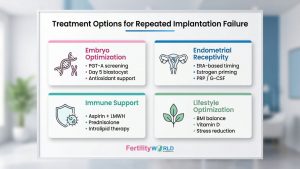
Improving Embryo Quality
The goal here is simple: make sure the embryo being transferred has the best chance of success from the start.
- PGT-A genetic testing: screens embryos for chromosomal abnormalities before transfer, ensuring only healthy embryos are selected for transfer.
- Blastocyst culture (Day 5): Waiting until Day 5 allows weaker embryos to opt out of the study, leaving only the strongest.
- CoQ10 and melatonin: antioxidant supplements that can improve the quality of eggs and sperm before treatment.
- Sperm DNA fragmentation: making changes to your lifestyle or having surgery to get sperm (TESA/PESA) can greatly benefit embryo development from the start.
Improving Endometrial Receptivity
Could your transfers simply be happening at the wrong time? This is more common than most people realise. A personalised embryo transfer (pET) based on ERA test results adjusts your transfer timing to fit your specific implantation window. For women with misplaced windows, this one alteration can drastically affect outcomes.
For thin endometrium, longer estrogen priming helps strengthen the lining, while PRP treatment and G-CSF infusions help it grow even more deeply. Endometrial scratch is widely discussed, but the evidence is genuinely mixed, and it is worth an honest conversation with your specialist before going ahead.
Immune-Based Treatments
If immunological elements are at play, the treatment must be tailored to your needs. For blood clotting disorders such as APS or thrombophilia, the typical treatment is a low-dose aspirin plus LMWH (Clexane). Low doses of prednisolone help calm overactive NK cells, while intralipid infusions help the immune system remain tolerant around the time of transfer. IVIG therapy is employed in some patients, but it is still pricey, and the data is continually changing.
Some immunological therapies are well established, while others are currently under investigation. It’s important to determine what’s best for your scenario, not a set of rules that works for everyone.
Lifestyle & Nutritional Interventions
Don’t ever underestimate what you can do:
- BMI optimisation: being either underweight or overweight has a big effect on implantation outcomes.
- Stop smoking: it’s one of the easiest methods to make implantation more likely to work.
- Vitamin D: insufficiency is widespread, directly affects implantation outcomes, but is rarely checked.
- Mediterranean diet: Foods high in antioxidants, such as those in the Mediterranean diet, help improve egg quality and endometrial health.
- Stress reduction: Yoga and acupuncture can help lower stress, which is important for implantation because it affects the hormonal environment.
Most folks don’t realise how much small, consistent changes can pile up by the time your next transfer rolls around.
Treatment Options by Root Cause
| Root Cause | Evidence-Based Treatment | Experimental / Adjunct |
|---|---|---|
| Chromosomal embryo defects | PGT-A, blastocyst transfer | Time-lapse monitoring |
| Thin endometrium | Estrogen priming, PRP, G-CSF | Sildenafil, stem cell therapy |
| Displaced implantation window | ERA-guided pET | — |
| Chronic endometritis | EMMA/ALICE + targeted antibiotics | Probiotic endometrial support |
| NK cell overactivity | Prednisolone, Intralipid | IVIG (limited evidence) |
| APS / Thrombophilia | Aspirin + LMWH (Clexane) | — |
| Sperm DNA damage | Lifestyle change, TESA/PESA | Antioxidant supplementation |
| PCOS-related endometrial issues | Metformin, weight loss, protocol adjustment | — |
What Are the Signs and Symptoms of Implantation Failure?
A lot of women don’t know this, but implantation failure typically doesn’t have any signs at all. There are no cramps, no unusual bleeding, and no evident physical signs. For most women, the sole sign is a negative pregnancy test. That quiet can be just as bad as any physical symptom.
Physical Signs of Implantation Failure
No obvious symptoms: Most unsuccessful implantations don’t show any signs at all; the body doesn’t even notice them.
Period-like bleed after transfer: Haemorrhage is usually just your cycle coming back because hormone assistance has stopped, not a real failed implantation bleeding
Failed implantation bleeding vs. implantation bleeding: Genuine implantation bleeding comes when an embryo successfully attaches. That haemorrhage has nothing to do with implantation if it never happened.
Can a failed implantation cause an early period? Sure, it can feel like that. When progesterone assistance quits after a negative test, the lining sheds. This can happen earlier or in a different way than it does during a normal cycle.
Unusual discharge after transfer: Usually caused by hormonal drugs taken during the cycle, not the failure of implantation itself.
Can you have two implantation bleeds? only if there were two different attempts to get pregnant. It’s rare and unlikely to happen in a single cycle.
When implantation doesn’t work, the embryo doesn’t pass in any way that can be seen. It just stops growing and is naturally reabsorbed by the body, without any noticeable moment.
The Emotional Signs That No One Talks About
The stress of waiting two weeks, the crash following a negative result, and the sadness of another lost cycle are all real signs of implantation failure, even though blood tests can’t assess them. They should get just as much attention as the physical ones.
Success Rates and What to Expect After Repeated Implantation Failure
When implantation fails after several IVF rounds, the most important question is, “Does this mean IVF will never work for me?” The honest answer for most women is no. But it does suggest that something needs to change before the next transfer.
Does Having RIF Mean IVF Will Never Work?
No way, but doing the same thing over and over again and hoping for a different result isn’t the answer either. Another failed transfer without proper investigation isn’t just bad luck. Many women do go on to have success following repeated implantation failure, typically within the next transfer once the true cause has been recognised and treated. What really changes the odds:
- Euploid embryo transfer – transferring chromosomally normal embryos confirmed through PGT-A significantly reduces the IVF failure rate.
- Treating the root cause – whether it’s uterine, immune, or hormonal- targeted treatment produces far better outcomes than simply trying again with the same protocol.
- Donor eggs – when egg quality is the primary issue, particularly in women over 40, donor egg success rates are consistently and significantly higher.
The most important mindset shift? Recurrent IVF failure reasons are almost always findable. Another failed transfer without proper investigation isn’t just bad luck; it’s a missed opportunity to find the answer that changes everything.’
When to Get a Second Opinion
If you’ve had two or more failed transfers and your clinic hasn’t given a formal inquiry, it’s time to ask deeper questions – or search elsewhere.
Here are some honest signals that it might be time to move on:
- You were told to “just try again,” but no new tests were given.
- No one has mentioned ERA, PGT-A, hysteroscopy, or immune testing
- Your concerns are being brushed aside rather than properly explored
RIF clinics that distinctly specialise work. They treat each situation as a puzzle to be solved, ruling things in and out systematically rather than doing the same things over and over. That fresh, thorough perspective is often exactly what changes the outcome. You don’t owe loyalty to a clinic at the expense of your own chances.
Taking the Next Step After Implantation Failure
Repeated IVF implantation failure doesn’t mean your journey is over; it only means you haven’t discovered the proper answers yet.
RIF may usually be diagnosed. There are real causes, investigations are ongoing, and there are more modern treatment options for implantation failure. Trying harder doesn’t improve the outcomes; trying smarter does. The right tests, the right specialist, and the right protocol built around your specific situation.
If there’s one piece of advice worth holding onto, don’t keep repeating the same transfer without understanding why the previous ones failed. Push for answers. Request a comprehensive investigation. If something doesn’t feel right, get a second opinion. And through it all, be nice to yourself. It’s hard to completely convey how tiring this road is to someone who hasn’t been through it. Your feelings are real, your determination is amazing, and you are not alone in this. The next step isn’t another transfer. It’s finding the answer that makes the next transfer the one that works.
- Book an online appointment: Get a free fertility consultation.
- Call: 9311850412
- Email: info@fertilityworld.in
Frequently Asked Question
Why does implantation fail even with healthy embryos?
Chromosomal problems, a thin uterine lining, hormonal imbalance, immunological dysfunction, inflammation, or poor endometrial receptivity can all cause implantation to fail, even if the embryos look perfect under a microscope.
How many failed transfers are considered repeated implantation failure?
Most experts say that repeated implantation failure happens when two or three good-quality embryo transfers fail, especially if at least one of them was genetically screened.
Can implantation failure happen naturally without IVF?
Yes. Many very early implantation failures in natural conception go unnoticed and may appear as a slightly delayed or heavier period.
What are the symptoms of implantation failure?
Most of the time, there are no clear signs. After an IVF cycle, most women just receive their period. Light spotting or mild cramping doesn't usually mean that something has gone wrong.
Can a thin uterine lining cause implantation failure?
Yes. A thin endometrium (typically less than 7mm) can make it less likely for an embryo to implant and may need focused therapy.
Can immune problems prevent implantation?
Some immunological or autoimmune disorders can hinder implantation by altering the uterus's response to the embryo.
How can repeated implantation failure be treated?
The treatment depends on the cause and could include genetic embryo testing (PGT), hormonal correction, immunological therapy, hysteroscopy, lifestyle changes, or individualized scheduling for embryo transfer.
Does age affect implantation success?
Yes. Egg quality declines with age, increasing the risk of chromosomal abnormalities that can prevent implantation.
Can you still get pregnant after repeated implantation failure?
Yes. Many women achieve pregnancy after identifying the underlying cause and adjusting the treatment approach.